

Learn
Blogs
Tutorials, guides and the science behind Magnum coatings.
14 October 2026
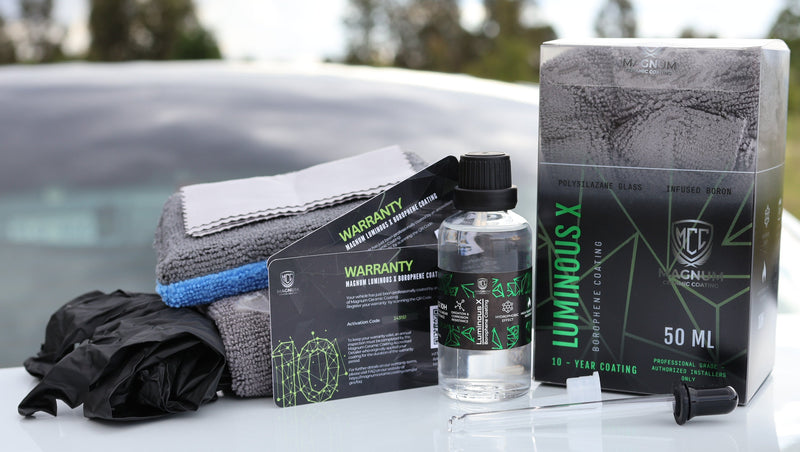
What CSIRO Found When We Threw Acid at Our Coatings
We sent Obsidian S1+ and Luminous X to CSIRO and asked them to hit both with concentrated acid and a lab grade...
Read more →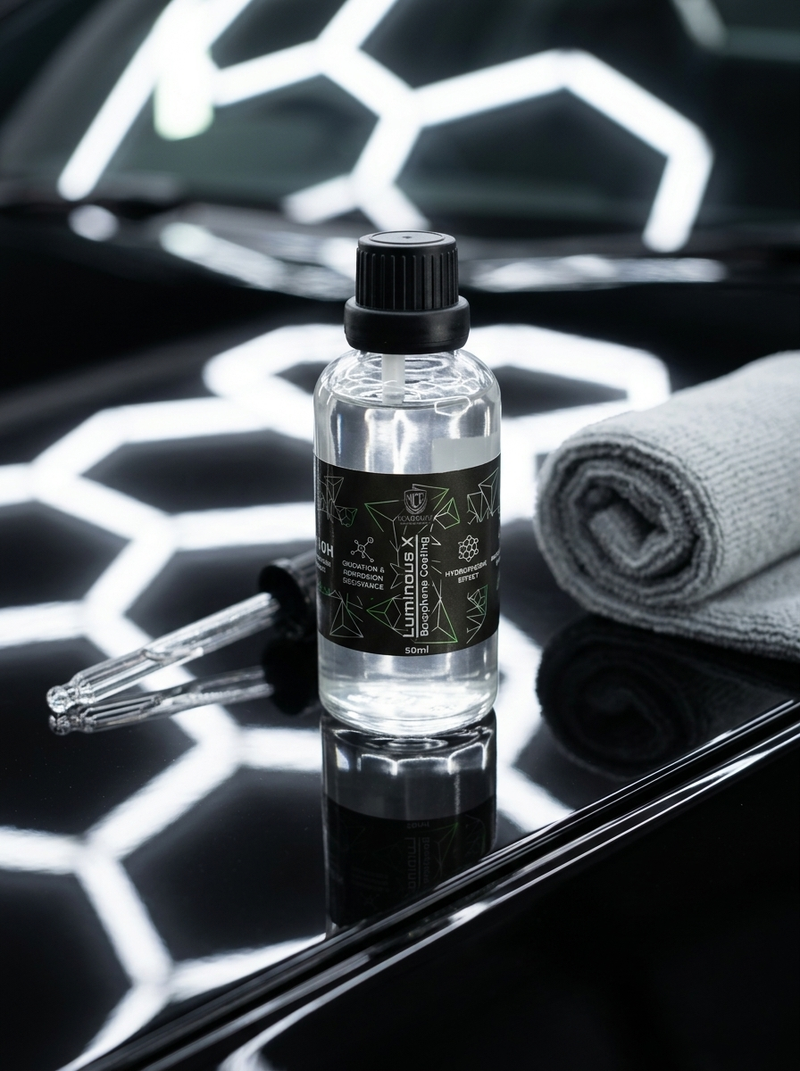
25 September 2026
Borophene Coatings: Fact, Fiction and the Real Chemistry
Borophene is a marketing term. Here's what's really in boron ceramic coatings: amorphous boron and polysilazane, backed by independent SGS testing.
Read more →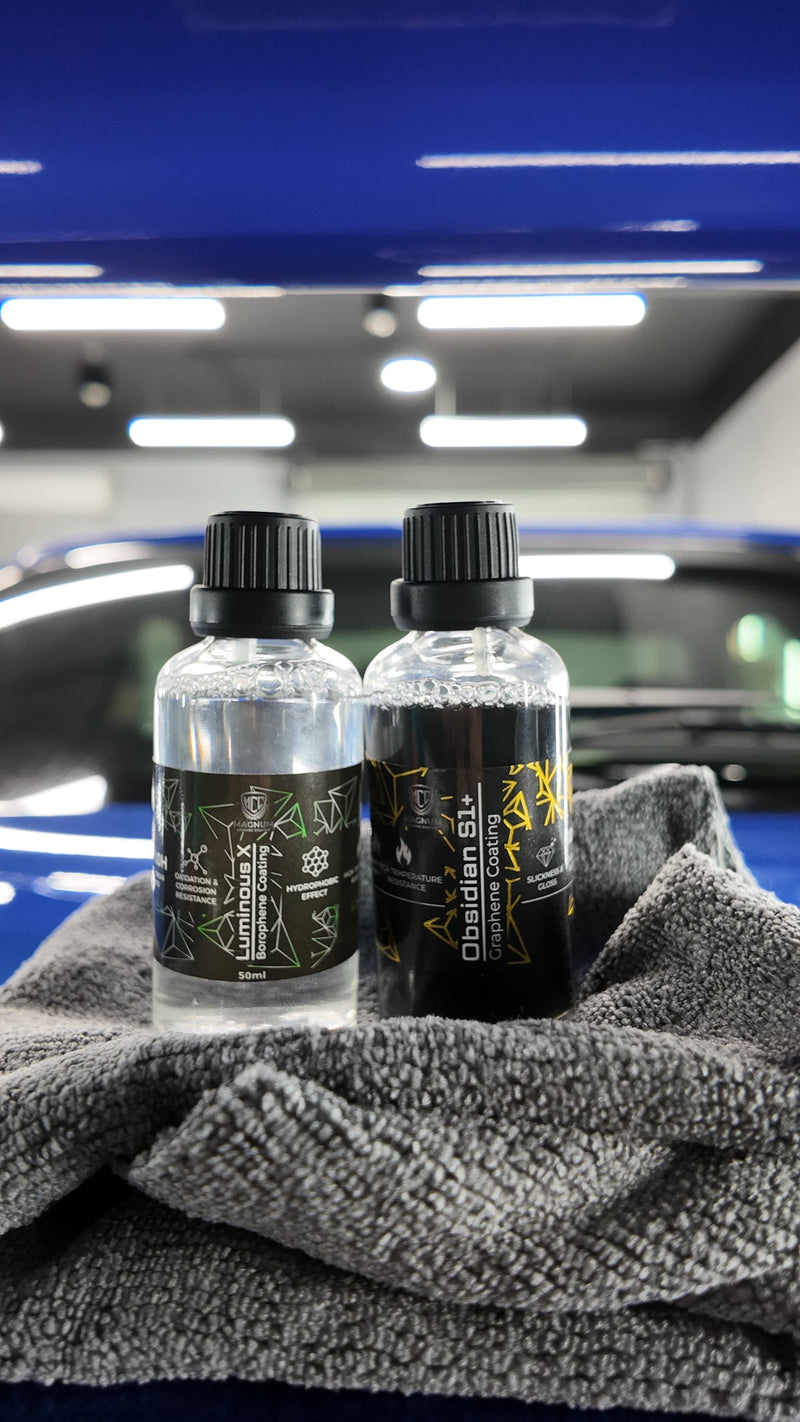
21 September 2026
Why Magnum Builds on Polysilazane, Graphene Oxide and Amorphous Boron
Most coatings are sold on the number. 10H. 120 degree contact angle. Five years. Very few are sold on what's actually in...
Read more →
28 July 2026
The Science of True Graphene: Why Dispersion Stability Dictates Coating Performance
When choosing a premium automotive coating, discerning customers love to inspect the formulation for visible proof of nano-graphene particles. However, what you...
Read more →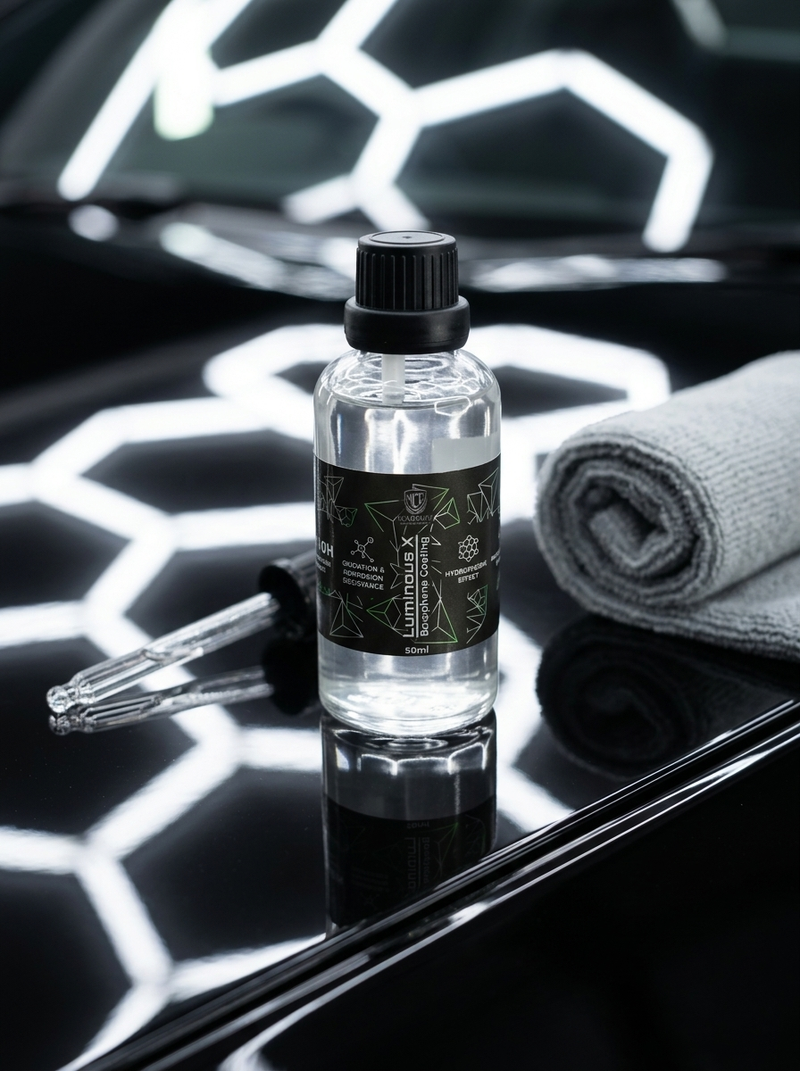
07 July 2026
Boron-Infused Coatings: The Next Generation of Ceramic Coating Technology
For years, graphene has been promoted as the next evolution in ceramic coating technology. While graphene introduced several performance advantages over conventional...
Read more →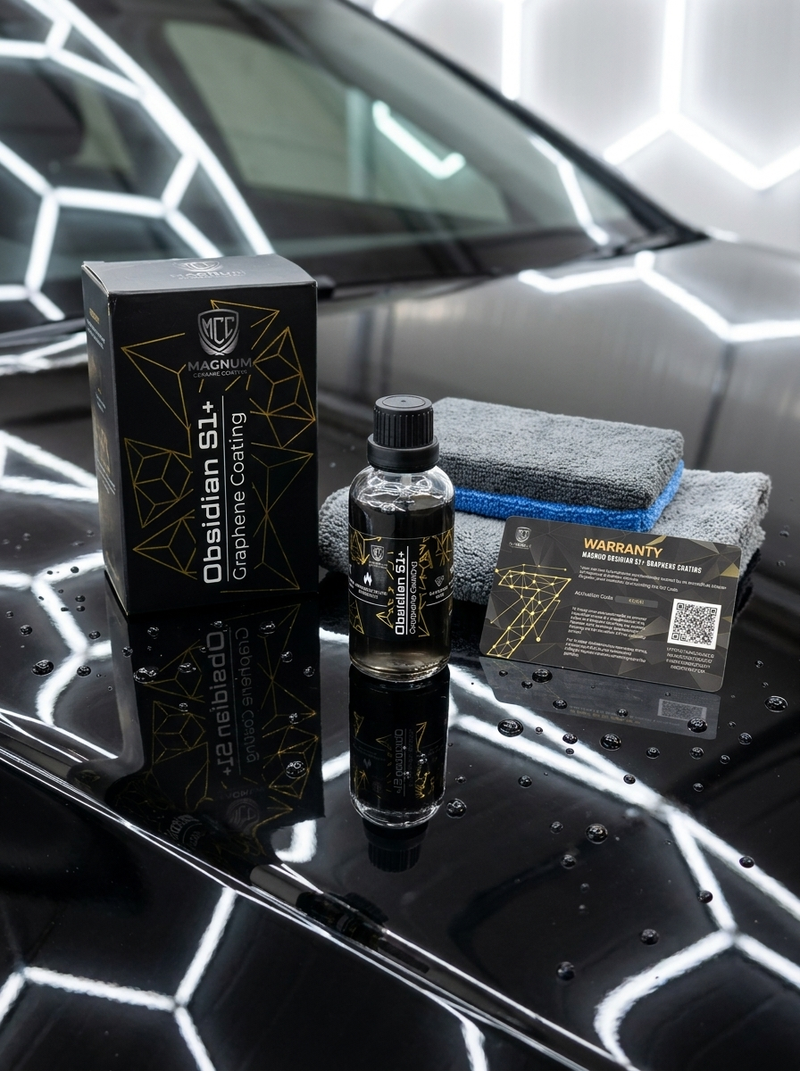
06 May 2026
Silicon Carbide vs Polysilazane
Silicon Carbide (SiC) Resins can be effectively used as an automotive ceramic coating, our technical team has conducted a rigorous material chemistry...
Read more →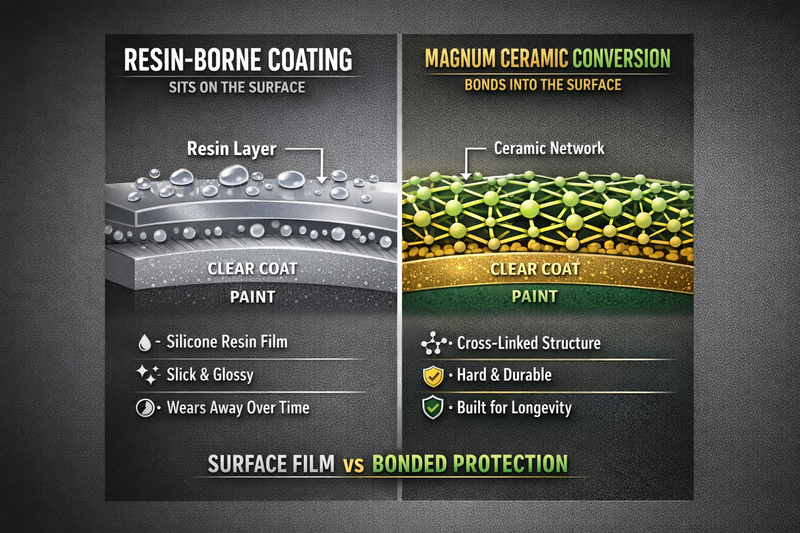
07 February 2026
Solvent Borne Silicone Resin Coatings vs Ceramic Conversion Coatings
Why Cross-Linking and Substrate Bonding Matter More Than Just Gloss and Slickness The term ceramic coating has become a catch-all in the...
Read more →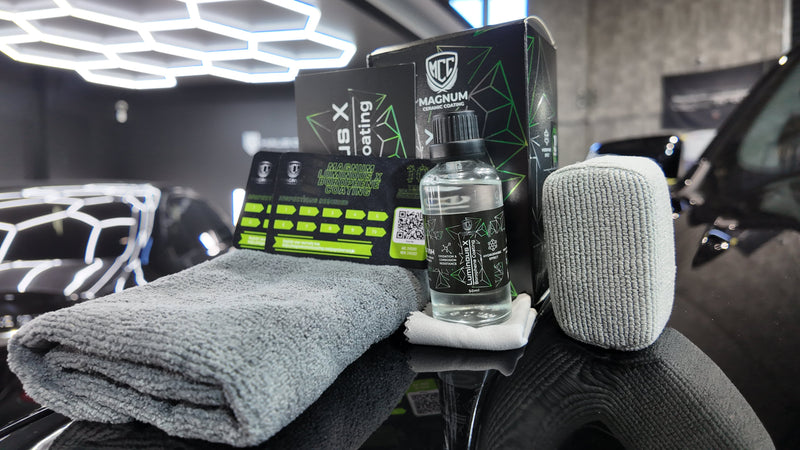
14 January 2026
The Two Types of Slickness in Ceramic Coatings — and Why Only One Lasts
Explanation of Different Smoothness Performance Mechanisms Our Luminous X and Obsidian S1+ achieves “slickness” through two completely different technical routes. The difference...
Read more →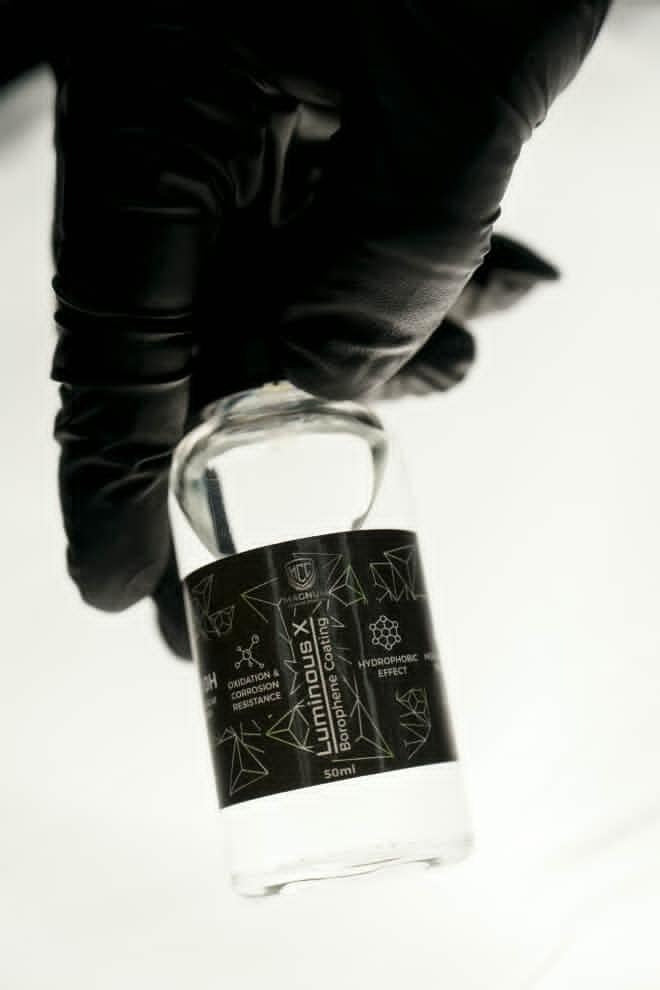
30 October 2025
The Science of Strength: Why Magnum’s Polysilazane Glass Resins Redefine Surface Protection
Polysilazane vs Siloxane: The Chemistry That Changes Everything In the world of surface protection, not all coatings are created equal. While most...
Read more →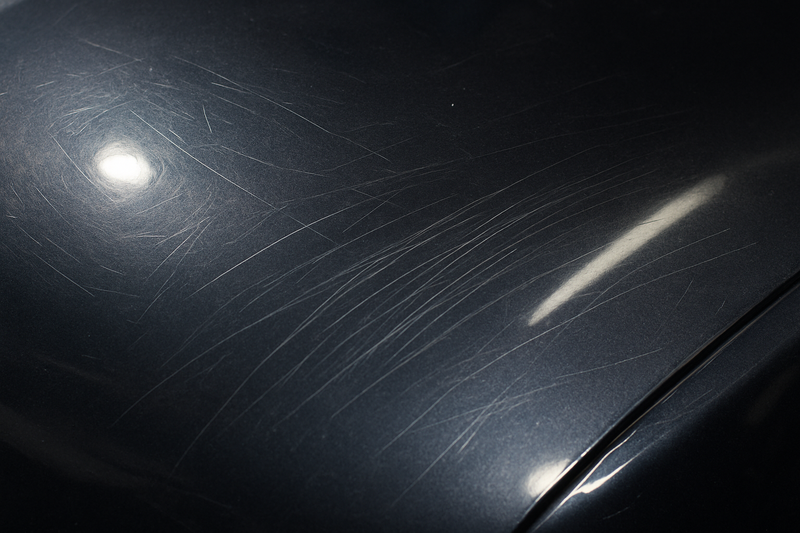
03 September 2025
Self Healing Coatings Debunked
Why We Do Not Develop "Self-Healing Coating" Products I. Background In recent years, some products marketed as “self-healing ceramic coatings” have appeared,...
Read more →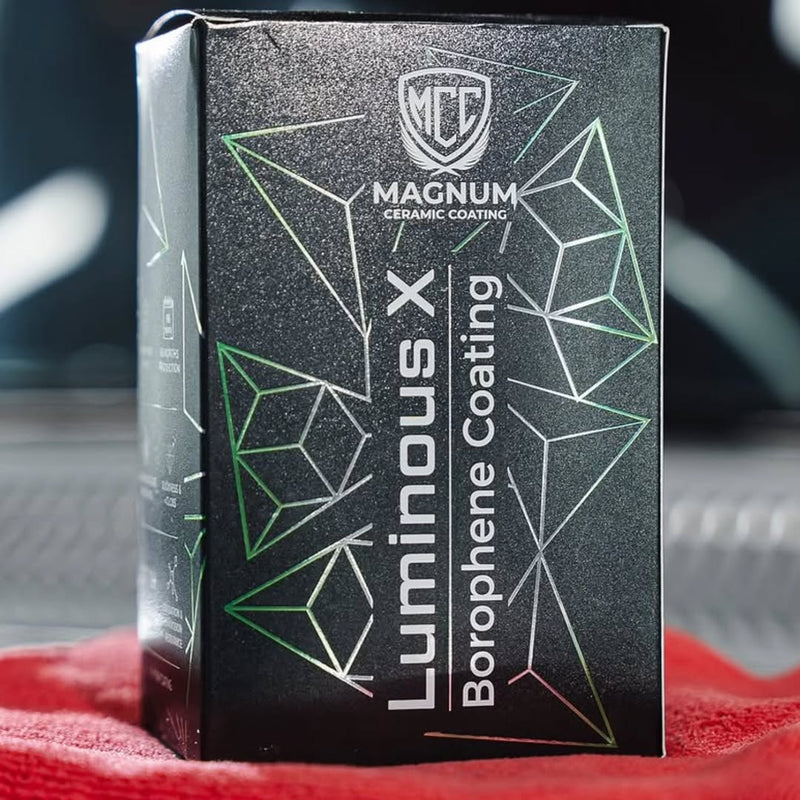
10 July 2025
Fact, Not Fiction: What Boron Really Does in a Ceramic Coating
What does boron actually do in a ceramic coating? Our lead chemist explains how Luminous X locks amorphous boron into polysilazane for...
Read more →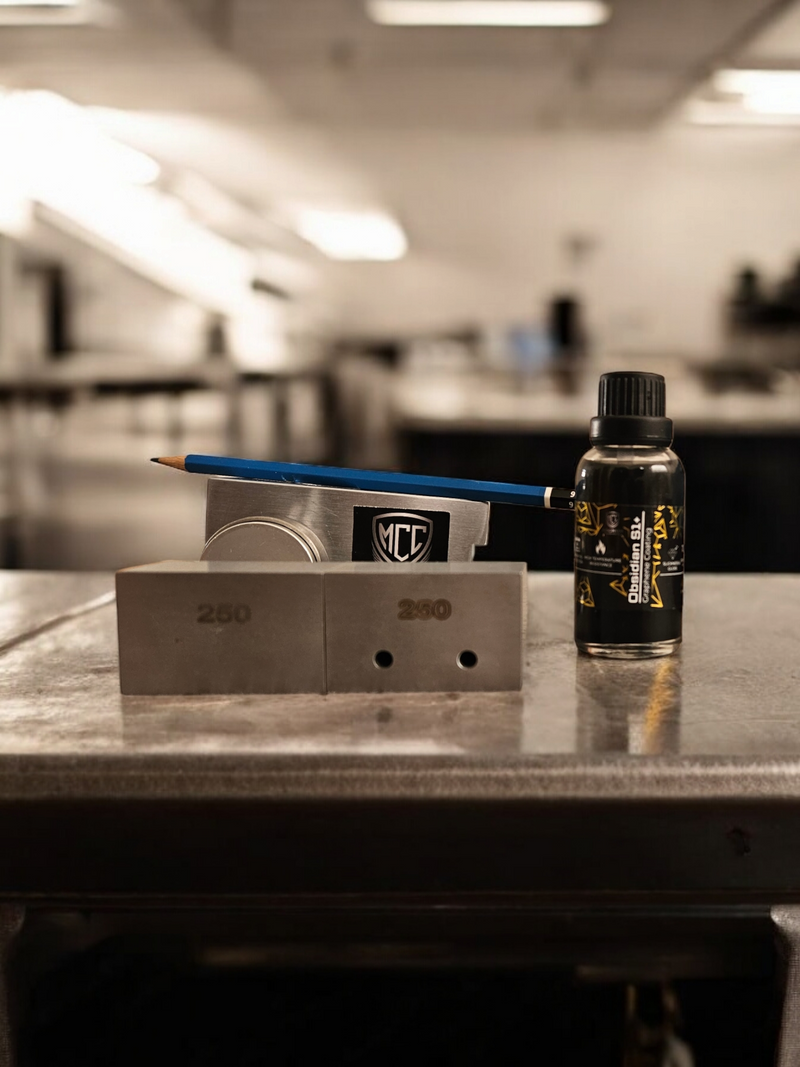
06 January 2025
Magnum Obsidian S1+ Hardness Ratings Explained
The Difference Between 10H and 9H Ceramic Coating: Magnum Graphene Obsidian S1+ Sets a New Standard Is there a real difference between...
Read more →